
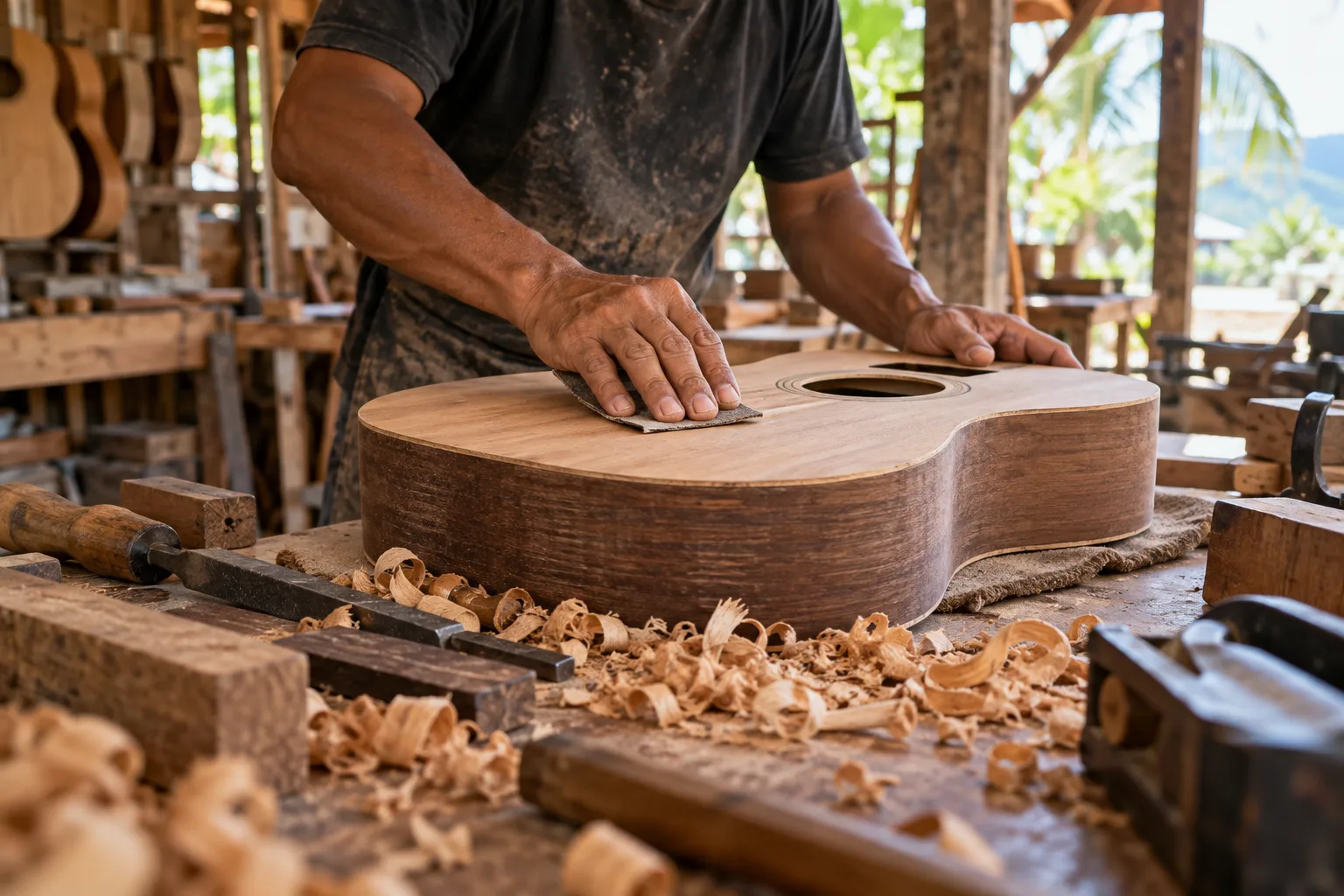
The Department of Tourism features Alegre Guitar Factory as a Cebuano craft experience in Lapu-Lapu City, describing guitar-making with locally sourced wood and skilled artisans. That is a useful lead for visitors interested in the craft. It is not a current promise of factory access, tour times or walk-in availability; confirm arrangements with the venue before travelling.
Why guitars belong in a Mactan guide
Mactan is often presented through beaches and resorts. The national tourism guide adds a different thread: Alegre Guitar Factory and local instrument-making. It describes artisans shaping locally sourced wood into instruments. That framing connects the visitor experience to skilled work rather than treating a workshop as a decorative stop. Department of Tourism: Lapu-Lapu City ↗
Confirm access before you go
A tourism feature is not a live visitor schedule. Contact the venue or consult the current official tourism listing before setting out. Ask whether visits are accepted on your date, whether an appointment is required, what parts of the workshop can be seen, and whether photography is permitted. Respect the makers’ workspace and follow any rules about tools, unfinished instruments and staff time.
If you plan to buy an instrument
Ask who made the instrument, what materials are used, how it was set up, whether a case is included, and how the instrument should be packed for travel. Keep a receipt and clarify shipping, baggage and customs questions with the relevant carrier and destination authority. Avoid assuming that a visitor demonstration makes every product locally made or that every instrument is available for immediate purchase.
Look beyond one workshop
The Department of Tourism also points to Filipino martial arts as part of Mactan’s cultural offer. Ask organizers directly about demonstrations, lessons or events before you plan around them. Read the Mactan heritage guide for historical context.
What to notice in the making process
A guitar workshop is a chance to pay attention to the steps behind the finished instrument: shaping, joining, finishing and setting up components so the guitar can be played. The Department of Tourism describes Alegre Guitar Factory as a Cebuano craft experience and mentions locally sourced wood. Treat that as a reason to learn from the makers, not as a promise that every step or material will be available to view on your visit.
If access is offered, ask before photographing people, tools or work in progress. Let staff explain which parts can be handled and which are delicate or unfinished. A respectful visit puts the makers’ work and time first, even if the production floor is busy or not open to visitors.
Questions to ask before buying
Ask what model and construction you are considering, which woods and components it uses, whether the instrument is new or display stock, and what setup or adjustments are included. Play it if the shop permits, check that tuning and intonation feel right to you, and ask about the return, repair and warranty terms in writing. Do not assume the instrument is suitable for your style just because it is handmade or locally made.
For an international flight, confirm dimensions and packing with the airline before paying. Ask the seller how it can be protected for checked baggage or whether a suitable cabin arrangement is possible, then compare the total landed cost with buying at home. Keep the receipt and any material or origin documentation the seller provides.
Plan a visit that works for the workshop
Contact the venue directly before you travel to ask whether visitors are currently received, whether an appointment is needed, how long to allow and which entrance to use. Confirm the address and payment options, and do not build a fixed route around an old directory listing. The site’s own confirmation is the most reliable source for that day’s access.
A guitar-making stop can pair with a heritage visit, but map both exact addresses and check the sequence from your accommodation. Read the Mactan heritage overview and the flexible three-day outline to make room for local craft without overloading the day.
If you take a guitar home
Before purchase, confirm the instrument’s final weight, dimensions and case. Ask the airline about its current musical-instrument baggage rules for your exact fare and route; carrier policies can differ. Do not rely on a general claim that a guitar will fit in an overhead bin. If it must be checked, discuss hard-case packing and any additional protection with the seller.
Ask the seller for a dated receipt and written care advice, then check any destination-country rules that apply to the materials in the instrument. Requirements depend on the materials and where you are traveling, so do not assume a generic origin statement is enough. Keep the seller’s documentation with the instrument.